BA (Hons) Business Studies
Student name:
Student id:
Table of Contents
Differences Between Human Resource Management and Personnel Management 4
Carpetright’s Strategic HR Priorities 9
Strategic Human Resource Management Models and Employment Framework 13
Organisational Culture and Its Impact on SHRM 17
Table of Figures
Figure 1:(Differences between HRM vs Personnel Management) 4
Figure 2:(Evolution of Human Resource Management) 5
Figure 3:(Difference Between Personnel Management and HRM) 7
Figure 5:(Strategic Management of Human Resources, Human Resources Strategic Model) 13
Figure 6:( Harvard Model of HRM) 14
Figure 7:(The effects of high-performance work systems in employees' service-oriented) 15
Introduction
Carpetright is a UK-based company that deals in flooring and beds and is one of the best-known furniture stores. As the firm has been established for more than 30 years, the company has established a stable position in the market; nevertheless, the opportunities for its development become less and less because of several factors, such as the presence of new types of competition, the shift to online shopping, and consumers’ change in behaviour. As such, business strategies at Carpetright must align with the current increased competition environment to address the need for increased performance. Of all the areas of organisational development that require major enhancement, one that stands out for the company is HR management. Human resources mostly have a central role in stimulating, enhancing and sustaining organisational performance. Human resource management practices are not only relevant to the performance and attitudes of the people in the organisation but also have a direct relation to the accomplishment of a firm’s strategic goals. Thus, to adjust to market needs Carpetright needs to move away from operational human resource management which tends to have its main emphasis on bureaucratic paperwork, and turn into strategic human resource management that is aimed at corresponding to the particular organisation’s objectives. SHRM empowers organisations to align Human resource operations with overall business objectives hence promoting an organisational culture that underpins organisational superiority. This report aims to recommend to Carpetright how one ought to best go about redesigning His/her actual HR procedures to foster a high-performing organisation. Through appreciating the distinctions between Human Resource Management and Personnel Management; analysing Carpetright's strategic focalisation in the HRM; and through the application of the main SHRM models this report will provide recommendations on how Carpetright can utilise its human capital to enhance organisational performance. Furthermore, the report will analyse the company’s organisational culture of the organisation as well as the impact it has on recommending the best changes that need to be made towards positively influencing the organisational culture concerning the desirable results concerning the SHRM. Specifically, Carpetright needs to become a market leader in its sector through benchmarked and efficient HR practices for long-term operations and growth.
Differences Between Human Resource Management and Personnel Management
Overview of HRM and Personnel Management
Human Resource Management and personnel management are two of the most important concepts used in managing employees within an organisation but the two are distinct in their breadth and scope, strategy and methodology. Personnel Management entails administrative work and maintenance of organisational relations with the workers whereas, Human Resource Management entails strategic management of people resources in a given organisation about the overall company goals (Ahammad, 2017).

Figure 1:(Differences between HRM vs Personnel Management)
Personnel Management on the other hand is perceived as more conventional and ‘administrative’ activities mainly involving the welfare of employees, payments, selection, and, observance of legal requirements only. Its function is mainly bureaucratic in terms of focusing on the documentation of employees, addressing employees’ complaints and verifying that employees stick to given policies and regulations. Personnel Management, on the other hand, is chiefly orientated toward the effective utilisation of employees, with considerably diminished focus on employee training or integrating HR undertakings with organisational strategies (Boselie and van der Heijden, 2024). On the other hand, Human Resource Management (HRM) is viewed more as a strategic business function. From the work, HRM is centred on the development of the individual as well as ensuring that human resource management is in harmony with the organisational objectives and objectives of the company. It operates policies that involve talent acquisition and management, creation of talent, culture of performance management as well as culture management.
Historical Development of HRM and Personnel Management
The evolution of the concepts of Personnel Management and HRM highlights the dynamics of the patterns of the employment of labour and the nature of business systems. These concepts of Personnel Management hail from the Industrial Revolution period of the late nineteenth and early twentieth centuries. Originally, personnel departments’ primary responsibilities included routine social relations matters like staffing, remuneration determination, and sanctions. Personnel Management at this time was majorly concerned with ensuring discipline and order and mostly involved with the employees’ compliance with organisational standards. Then, in the early 20th century especially after World War II, Personnel Management started moving to a more dispensable model with a focus on the employee (Bratton et al., 2021). Following IR movements and SW concepts, personnel managers began shifting from HRM’s major employment trend towards job enrichment, caring for employees’ needs, and bargaining with trade unions. However, these functions were still preponderantly administrative and operational, serving to stabilise a labour force rather than to positively transform an organisation and its performance.

Figure 2:(Evolution of Human Resource Management)
(Source: https://hrdictionaryblog.com/wp-content/uploads/2012/10/evolution-of-hrm3.jpg?w=1024 )
It is only in the second half of the twentieth century that what has come to be known as Human Resource Management (HRM), evolved due to several significant changes in the global business arena. The position of employee extended its significance to organisational performance as economies transformed into service-based knowledge economies. Changes occurred in the business environment and businesses understood that the efficiency of management of their resources through efficient organisational processes is not enough to gain competitive advantage; it is also necessary to explore the possibilities that the people working in the organisations can offer. This realisation led to a change from what was previously known as Personnel Management to HRM. Bearing in mind the thinking of writers like Peter Drucker and adopting strategic trends including the Porter competitive strategy, HRM developed into a strategic decision-maker in business and corporate strategy formulation (Galpin, 2023).
More so, the increment in the level of competition, advancement in technology, and globalisation during the 1980 and 1990 led to increased emphasis on HRM. Thus, organisations implemented strategic human resource practices to acquire, develop and maintain people which they consider as the key source for competitive advantage. This new paradigm noted that the workers were not cost centres to be controlled but strategic resources that could be leveraged to offer a competitive advantage if well harnessed (Bailey et al., 2018). Over the last several decades, HRM has remained a dynamic concept that embraced advances in technology, as well as the concept of personnel health, and diversity. Current HRM practices involve the use of technologies in the recruitment of workers, rating of performance of employees and management of employee relations with increased use of quantitative techniques. The scope of work of HRM has grown more than just recruiting, selecting, training, appraising, compensating, and maintaining organisational records.
Key Differences Between Personnel Management and HRM

Figure 3:(Difference Between Personnel Management and HRM)
(Source: https://images.shiksha.com/mediadata/images/articles/1702653881phpMJ7I91.jpeg )
While both Personnel Management and HRM deal with workforce issues, their approach, scope, and focus vary significantly.
Administrative vs. Strategic Focus: Personnel Management consists of personnel administrative activities that involve handling wages, records and other legal matters concerning employees. HRM, on the other hand, maintains a strategic perspective, looking to bring coordination of the employee with the strategic outlook of the organisation. Workforce planning, talent management and performance management, which are all elements of HRM are useful in delivering business results (Mahapatro, 2021)
Reactive vs. Proactive Approach: Personnel Management is mainly tactical, dealing with employees’ issues when they occur, and is mainly oriented towards the immediate future. First, let’s define the difference between the two concepts: Low Road is reactive, frequently following the lack of workforce demand, determining eventual skill deficiencies, and prescribing a course of action that improves employee commitment and performance in the long run about the organisation, whereas HRM actively plans for the workforce, assessing possible skill shortages, and offering organisational solutions for boosting long-term workforce loyalty and productivity (Crawshaw, Budhwar, and Davis, 2020).
Employee Relations vs. Employee Development: As practiced in most organisations Personnel Management looks at employees more as an object to manipulate, the goal here being the efficient running of the organisation. On the other hand, HRM views employees as valuable stocks that must be trained, committed and motivated to enhance organisational performance. HRM attaches considerable importance to development, training and performance appraisal (Armstrong and Taylor, 2023).
Workforce Control vs. Workforce Engagement: Personnel Management is more focused on directing employees monitoring their conduct making sure they adhere to the organisational standard and policy and reducing employee interruptions. HRM on the other hand is more concerned with how it can effectively manage employees, promote organisational culture that can foster the delivery of corporate vision and goals, and provide the needed support for the organisation’s employees to contribute positively to its innovation and growth (Cook, MacKenzie, and Forde, 2020).
Short-Term vs. Long-Term Goals: Personnel Management is inclined towards administrative activities related to employees, objectives in its realm are often short-term, which revolve mostly around the management of employee relations. HRM is more forward-looking with an emphasis on organisational efficiency mapped on long-term benefits by training and nurturing the employees with requisite skills, and about organisational culture.
Carpetright’s Strategic HR Priorities
Analysis of Carpetright’s Business Strategy
Carpetright UK is a leading Carpet and beds retailer, which is in a competitive chain that relies on social trends, technological innovation and the expansion of the Internet. For this reason, the company has been making changes in its business model to enable it to respond to these shifting market features. Carpetright has five principal business themes: recognising and developing its customer-facing employees; improving employee engagement; making changes to workforce management; controlling costs; and leveraging technology (Hammond, 2017).

Figure 4:(Carpet Installation Service Market Size, Strategies: Unlocking Growth Opportunities and Forecast)
Market Position and Challenges:
This pressure on Carpetright is due to the enhanced competition from online shops and low-price rivals as well as customer interest shifts toward simpler and bespoke services. In response to the challenge, the company has shut down some outlets, started ?- selling and concentrating on modifying the customer experience in existing stores. However, new threats like the optimisation of the store network and the effective management of operating expenses for the integration of technology remain disruptive to the firm (Pilkington, 2019).
Key Strategic Areas
Workforce Flexibility: Carpetright plans to enhance its responsiveness of the human resources to the number and type of customers it receives. This presupposes the ability of the human resource management function to provide its employees the flexibility in working conditions, their ability to work in two or more functions, and a more fluid personnel structure (Harris, 2018).
Technology Integration: In line with its plans, Carpetright has adopted the use of digital tools to enhance its performance through efficiency of the processes and better relations with consumers through online and physical space. This calls for the human resource department to train the employees to effectively work with new technologies.
Customer Service: Customer service will continue to be a focus, and be maintained at high levels. Carpetright’s HR needs to concentrate on sourcing and preparing employees who have good people skills and knowledge about the products to boost customer relations (Buttle and Maklan, 2019).
Cost Efficiency: There is a need to constantly strive to reduce total costs; this is so especially given stiffening competition and decreasing price consciousness in the market. Some of the operational costs for staffing by HR must be made in an efficient way to achieve its financial goals without affecting the quality of services being offered.
HR Priorities and Challenges
About these strategic business goals, Carpetright must develop HR priorities that are harmonised with the goals. Major subcategories are talent and performance, engagement and connection, and workforce and planning.
Talent Management
To build on its competitiveness, Carpetright has to work on talent acquisition, development and maintenance. Due to the competitiveness of the retail industry, the company needs to employ competent and lane flexible employees with good interpersonal skills and subject-appropriate product knowledge. Yet, the growth of the right quantity of high-quality employees is an issue, since retail is known for its high rates of employee turnover and a lack of qualified workforce. This means that the company’s recruitment strategies must be adjusted to attract those kinds of employees (Harris, 2018).
Employee Engagement and Retention
The strategic issue that organisations like Carpetright have to deal with is low employee engagement and turnover rate. As with most retailers, Carpetright suffers from low employee retention rates, especially among workers who are often in the sales cadre as their job prospects may not always be bright. This is an issue that HR must fix since it is now their responsibility to design the workplace that engages the worker, the process of giving him or her a chance to advance in the career, as well as a system of rewards. Moreover, enhancing the engagement of the human capital can also prevent high turnover rates, so there will be more stability in the employees, and better service and effectiveness will result (Cassell et al., 2022).
Workforce Planning
As will be shown, workforce flexibility is one of Carpetright’s strategic management priorities, and so it needs to focus on developing strong workforce planning. This embraces the practice of making certain that an adequate number of staff, endowed with the right skills is identified to serve a business process. For example, HR has to ensure that the organisation can somehow hire additional workers during important promotions or festive seasons without becoming overwhelmed during non-promotion seasons. This may mean the use of part-time employees, multi-tasking, or even forecasting the demand force at a particular time (Kazemi et al., 2024).
Skills Gaps
Another issue is that of skills shortages, especially bearing in mind that Carpetright has probably been growing its use of technology in its operations. These and other reasons mean that many retail employees have not had the training necessary to understand the new systems or handle online queries from customers. HR must pay great attention to learning and development courses as they enhance the employee’s ability to effectively address the technological advancement in the retail sector (Kulz, 2017).
Strategic HR Planning and Alignment
For Carpetright to achieve its business goals, its HR practices must be closely aligned with its strategic priorities. This alignment is crucial in ensuring that HR contributes to the company’s overall success by enhancing its human capital management.
Recruitment and Selection: Carpetright has to improve the character of the employees it hires by targeting the right candidates during recruitment and concentrating on candidates with good interpersonal skills, technical skills and those that possess good sales and customer service skills. Recruitment promotion strategies that should be adopted in the recruitment process include; Challenges with a focus on the advancement of careers and the opportunity to work in a retail chain. Further, the digital recruitment tools enable Carpetright to extend its sourcing strategy and simplify the candidate choice (Warring, 2018).
Retention and Employee Development: To avoid losing talent, Carpetright’s HR can return talent retention to centre stage by putting most of its efforts into the pool of methods like employee experience. This can be done through staff development programmes that enable personnel to advance within the organisation. This strategy will also encourage its employees to remain with Carpetright for the long term since they are likely to be rewarded well if the company has well-structured career progression programs and conducts constant training sessions and performance-based bonuses (Fletcher, Alfes, and Robinson, 2018).
Learning and Development: Motivating employees: At the same time, the use of more and different digital tools in the company requires constant learning and development by HR within the organisation. Elements included in this training are digital platforms, customer relationship management, or other correspondent technologies applied in the stores and through the Internet. The company’s new business model will be served best by a strong and well-trained workforce since customers will require quality service delivery (Mihalcea, 2017).
Performance Management: Carpetright must implement a robust performance management system to ensure that employee performance aligns with the company’s strategic objectives. This involves setting clear performance targets, providing regular feedback, and recognising and rewarding high performers. A performance-driven culture will motivate employees to work toward shared business goals, ultimately enhancing the company’s productivity and customer service (García Martín and Herrero, 2020).
Leadership Development: Effective leadership is essential for driving HR alignment with business strategy. Carpetright should focus on developing its management team through leadership development programs that emphasise strategic thinking, people management, and change leadership. Strong leadership will be critical in guiding the company through its restructuring process and ensuring that HR practices are effectively aligned with its long-term goals (Holbeche, 2022).
Strategic Human Resource Management Models and Employment Framework
Introduction to SHRM
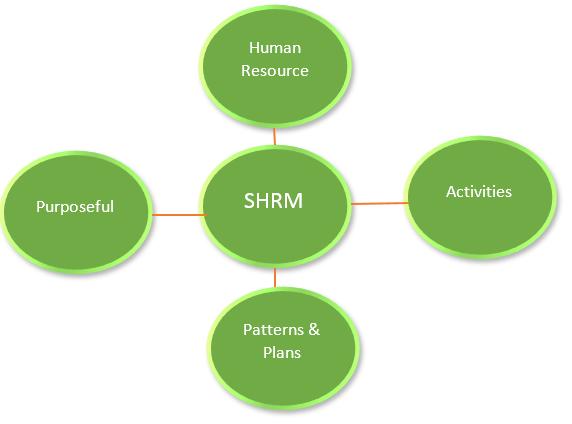
Strategic Human Resource Management (SHRM) refers to the proactive management of human resources in alignment with an organisation’s overall strategy. It revolves around the harmonisation of change with the overall organisational human resource management agenda in the pursuit of long-term strategic talent-sourcing advantages. SHRM underlines the strategic function of HR in providing and supporting human capital, building an organisational culture for performance and encouraging behaviours that support the achievement of organisational goals (Storey, Ulrich, and Wright, 2019).

Figure 5:(Strategic Management of Human Resources, Human Resources Strategic Model)
(Source: https://www.civilserviceindia.com/subject/Management/notes/images/components-of-shrm.png )
Suitable SHRM Models
Several SHRM models offer frameworks that can help Carpetright align its HR practices with its strategic goals:
The Harvard Model
This model also focuses on having an interface between different external and internal stakeholder groups (employees, management, customers and shareholders). It connects HR outcomes which embrace employee commitment and competence to the durability of organisational performance. This model can be used by Carpetright to align its HR practices to the needs of the organisation, as well as the employees (Chebbi et al., 2020).

Figure 6:( Harvard Model of HRM)
The Resource-Based View (RBV)
Balancing the resource and the capability view RBV postulates that a firm competitive benefit arises from the employment of unique resources in a workforce. For Carpetright, the benefit is understanding and implementing the development of its employees, skills acquisition and leadership development that guarantees it a good crop of employees that cannot be easily abducted by competitors. The following lesson can also be learnt from the SWOT analysis Creating and maintaining a skilled and motivated workforce (D’Oria et al., 2021).
Best-Fit Model
This model highlights the need to ensure that the strategic HR keeps in tune with the particular needs of the organisation. It was for Carpetright to have its own HR practices on recruitment and performance management best suited to its business environment and competition. For instance, the organisation would benefit from using more flexible staffing strategies, as well as performance-based compensation policies (Holbeche, 2022).
High-Performance Work Systems (HPWS)
HPWS is meant to improve both the employee and the organisational effectiveness where the employee relations are formative. Possible activities that Carpetright may adopt to enhance high-performance working packages include the utilisation of teams, decentralised discretion, learning and reward for performance to achieve improved capabilities in the delivery of services, especially customer relations and information technology.

Figure 7:(The effects of high-performance work systems in employees' service-oriented)
(Source: https://ars.els-cdn.com/content/image/1-s2.0-S0278431920301626-gr1.jpg )
Carpetright’s Employment Model
The current employment approach at Carpetright seems to fit the conventional retail prospects, where the interest is put on cost leanness and organisational efficiency. Nevertheless, for the company to remain viable, competitive, innovative, and productive it needs to develop a new model of flexibility, work-life balance, employee development, and commitment. Some of how Carpetright can achieve corporate success for its employees include; maintaining work-life balance and flexible working conditions (Ellina, 2020).
Organisational Levers for HR Management
To optimise its HR management, Carpetright can leverage several organisational levels:
Leadership
The head of the line functions plays an important role in the ability of the HR to respond to the business strategy. To achieve HRM, Carpetright’s leaders must support the processes and help create an environment where people would learn, work with passion and be inventive. Business leadership training seminars and courses are most useful for managers when the company is restructuring.
Reward Systems
At Carpetright, it’s possible to incorporate performance-based incentives that will help the company achieve its strategic goals. Rewarding for performance means that productivity and engagement will improve and contribute to its corporate competitive advantage (Turner, 2019).
Organisational Structure
Greater decentralisation of the company’s structure can improve decision-making output and staff independence, essential for reacting to market shifts. Carpetright can transform to decentralise decision-making in a way that enables teams to be faster and more customer-centric.
Technology
The digital recruitment solutions for attracting and selecting employees and the learning management system for training are but a few areas of human capital management as Carpetright implements the use of SOAR (Security Orchestration, Automation, and Response) advanced technologies (Kinyua and Awuah, 2021). It is achievable to leverage technology to enhance efficiency, cut expenses and enable the firm to make headway towards realising a high-performance working culture.
Organisational Culture and Its Impact on SHRM
Organisational Culture Overview
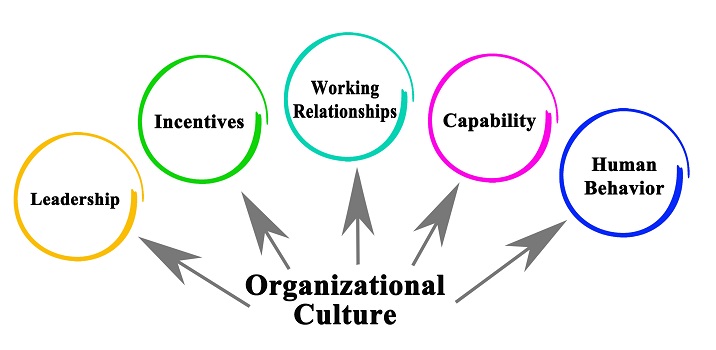
Organisational culture is the general perception that people of a particular organisation hold about their business organisation. Edgar Schein’s model describes the culture in three layers: tangible objects (elements of organisational work and practices), stated beliefs (management strategies, aims and ideals), and assumptions (unconscious preconceptions in organisational work) (Aviles, 2019). The culture is a dominant driver of HR practices since it outlines how employees should be, how they should communicate, how they should lead, and how working conditions should be. A highly supportive culture that is integrated into strategic HR management practices helps align business and HR objectives and drive improvement and higher levels of performance.

Figure 8:(HRM - Organizational Culture)
(Source: https://www.tutorialspoint.com/human_resource_management/images/organizational_culture.jpg )
Current Organisational Culture at Carpetright
Carpetright has more of a traditional organisational culture powerfully displaying attributes of hierarchy with a specific emphasis on cost and operations. Customers are valued and it is probable that an organisation's culture is performance-oriented and will encourage standardised procedures and well-defined leadership positions. However, there could be less concern with creativity and decision-making and improvement of employee relations, because the strategy appears to be even more centrally controlled and cost-cutting in the face of intense competition in the retail environment. Communication in the organisation may be mainly in the downward direction with top management primarily concerned with getting tasks accomplished without necessarily having to worry about how employees are going to create work together with their colleagues (Kulz, 2017).
Impact of Culture on SHRM
It is important to understand that Carpetright’s current corporate culture may present a lot of problems for strategic HR management. SHRM practices such as talent management, flexible workforce strategies, and continuous learning might be constrained by rigid structures and limited collaboration. The potential pressures via integrated SHRM practices, including talent management, flexible workforce management and development, and continuous learning and development may be hampered by overly formal systems and poor integration. Further, improvement in the cost-cutting model might cause the organisation to invest less in the recruitment, training and maintenance of their employees hence fulfilling their key valuables such as retention and motivation. It also means that where the overall culture is not supportive of change and cross-functional teamwork, the use of models such as High-Performance Work Systems (HPWS), integral to SHRM will also be constricted (Vu and Nwachukwu, 2020).
Recommendations for Cultural Alignment
Carpetright needs to design its culture correspondingly oriented to SHRM goals, which would involve the promotion of collaboration, delegation of responsibilities, and generation of ideas. This can be done by explaining a leadership culture that supports the sharing of ideas, and involvement of employees in decision-making and training. The company should also dedicate resources to improve all the qualities that would improve the employees’ morale, for instance, reward system and promotions. Both Google and Zappos are examples of organisations that have been able to bring in the cultural aspect with other HR strategies through flexibility, innovation, and better employee health (Tran, 2017). Carpetright can also implement a culture change which would be conducive to strategic HR practices and outcomes with a positive impact on total organisational performance and competitiveness.
Conclusion
To sum up, the need for the Carpetright organisation to transform its HR practices to increase its competitiveness in the marketplace has been discussed in detail. This paper compared and contrasted the old Personnel Management with the modern Human Resource Management (HRM) noting Carpetright needed to embrace the strategic and strategic/unilateral approach. Observations from the business Carpetright’s strategy and HR priorities highlighted issues that if addressed would lead to sustainable competitive advantage in the organisation; these included; flexibility in the workforce, investment in the employees and customer focus. Using Resource-Based Views as well as High-Performance Work Systems that are SHRM models, Carpetright can ensure that their business Goals & objectives are met especially in a human resource management aspect by improving employees’ engagement, retention & performance. Moreover, it argued that the company’s culture has to be changed to correspond to the strategic HR changes concerning more collaboration, innovative solutions, and people’s empowerment. In terms of improving organisational performance, here there is advice to Carpetright to adopt a more flexible structure, invest in both highly effective and practical human resource technologies, and focus on leadership development and performance-related incentives. These developed strategies will assist the company in achieving its goal of developing a high-performing workforce and realising increased operational efficiency rendering a stronger market competitiveness in its core retail sector.
References
Ahammad, T., (2017). Personnel management to human resource management (HRM): How HRM functions. Journal of Modern Accounting and Auditing, 13(9), pp.412-420.
Armstrong, M. and Taylor, S., (2023). Armstrong's handbook of human resource management practice: A guide to the theory and practice of people management. Kogan Page Publishers.
Aviles, K.O., (2019). Ethical Organisational Culture: Most Ethical US Organisations (Doctoral dissertation, Capella University).
Bailey, C., Mankin, D., Kelliher, C. and Garavan, T., (2018). Strategic human resource management. Oxford University Press.
Boselie, P. and van der Heijden, B., (2024). Strategic human resource management: A balanced approach. McGraw Hill.
Bratton, J., Gold, J., Bratton, A. and Steele, L., (2021). Human resource management. Bloomsbury Publishing.
Buttle, F. and Maklan, S., (2019). Customer relationship management: concepts and technologies. Routledge.
Cassell, C., Watson, K., Ford, J. and Kele, J., (2022). Understanding inclusion in the retail industry: incorporating the majority perspective. Personnel Review, 51(1), pp.230-250.
Chebbi, H., Yahiaoui, D., Sellami, M., Papasolomou, I. and Melanthiou, Y., (2020). Focusing on internal stakeholders to enable the implementation of organisational change towards corporate entrepreneurship: A case study from France. Journal of Business Research, 119, pp.209-217.
Cook, H., MacKenzie, R. and Forde, C., (2020). Union partnership as a facilitator to HRM: improving implementation through oppositional engagement. The International Journal of Human Resource Management, 31(10), pp.1262-1284.
Crawshaw, J., Budhwar, P. and Davis, A. eds., (2020). Human resource management: Strategic and international perspectives. Sage.
D’Oria, L., Crook, T.R., Ketchen Jr, D.J., Sirmon, D.G. and Wright, M., (2021). The evolution of resource-based inquiry: A review and meta-analytic integration of the strategic resources–actions–performance pathway. Journal of Management, 47(6), pp.1383-1429.
Ellina, S., (2020). Analysis of the Corporate Rescue Procedures in the Insolvency Law of the UK and Cyprus: An Empirical Perspective (Doctoral dissertation, Lancaster University).
Fletcher, L., Alfes, K. and Robinson, D., (2018). The relationship between perceived training and development and employee retention: the mediating role of work attitudes. The International Journal of Human Resource Management, 29(18), pp.2701-2728.
Galpin, T., (2023). The strategist's handbook: tools, templates, and best practices across the strategy process. Oxford University Press.
García Martín, C.J. and Herrero, B., (2020). Do board characteristics affect environmental performance? A study of EU firms. Corporate Social Responsibility and Environmental Management, 27(1), pp.74-94.
Hammond, R., (2017). Smart retail: Winning ideas and strategies from the most successful retailers in the world. Pearson UK.
Harris, R., (2018). Commercial real estate: planning for change.
Holbeche, L., (2022). Aligning human resources and business strategy. Routledge.
Kazemi, E., Calabrese, J., Lind, T., Lewis, B., Resnick, A.F. and Gibbons, L.K., (2024). Learning Together: Organizing Schools for Teacher and Student Learning. Harvard Education Press.
Kinyua, J. and Awuah, L., (2021). AI/ML in Security Orchestration, Automation and Response: Future Research Directions. Intelligent Automation & Soft Computing, 28(2).
Kulz, C., (2017). Factories for learning: Making race, class and inequality in the neoliberal academy. In Factories for learning. Manchester University Press.
Mahapatro, B., (2021). Human resource management. New Age International (P) Ltd..
Mihalcea, A., (2017). Employer branding and talent management in the digital age. Management Dynamics in the Knowledge Economy, 5(2), pp.289-306.
Pilkington, M., (2019). Retail Therapy: Why The Retail Industry Is Broken–And What Can Be Done To Fix It. Bloomsbury Publishing.
Storey, J., Ulrich, D. and Wright, P.M., (2019). Strategic human resource management: A research overview. Routledge.
Tran, S.K., (2017). GOOGLE: a reflection of culture, leader, and management. International Journal of Corporate Social Responsibility, 2, pp.1-14.
Turner, P., (2019). Employee engagement in contemporary organisations: Maintaining high productivity and sustained competitiveness. Springer Nature.
Vu, H.M. and Nwachukwu, C., (2020). Strategic human resource management, organisational culture and academic staff retention: A literature review. Economics Management Innovation, 12(2), pp.5-12.
Warring, N., (2018), September. Living with precarious work: The case of graduates in Denmark. In Work Employment and Society conference 2018: Putting Sociology to Work: Interdisciplinarity, intersectionality and imagination.
Also Read
- COIT20257 Assessment item 3: Distributed Databases, Ubiquitous Systems, and Cloud Computing Fault Tolerance
- Entrepreneurial Ventures: Growth, Development and Impact
- Mobile App Design and Development for Foodies
- Cafepod Coffee Co. Business Analysis
- Managing Risk and the Applicability of Human Fallibility at the Workplace